I boarded the West bound train with Emily yesterday at 8:06 AM. She got off two stops later at Fukuoka, while I stayed on the train.
Thirty minutes later, I got off in Kanazawa, bought a few onigiri to snack on throughout the day, and hopped onto the Kanazawa Loop Bus, headed towards Kenrokuen. Emily and I visited this park about two months ago, but I wanted to go back and see the park covered in snow.
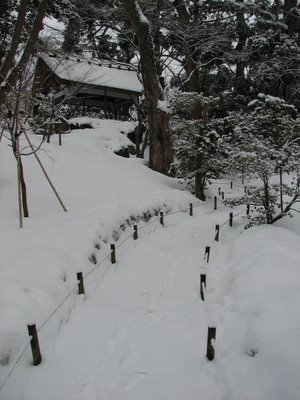
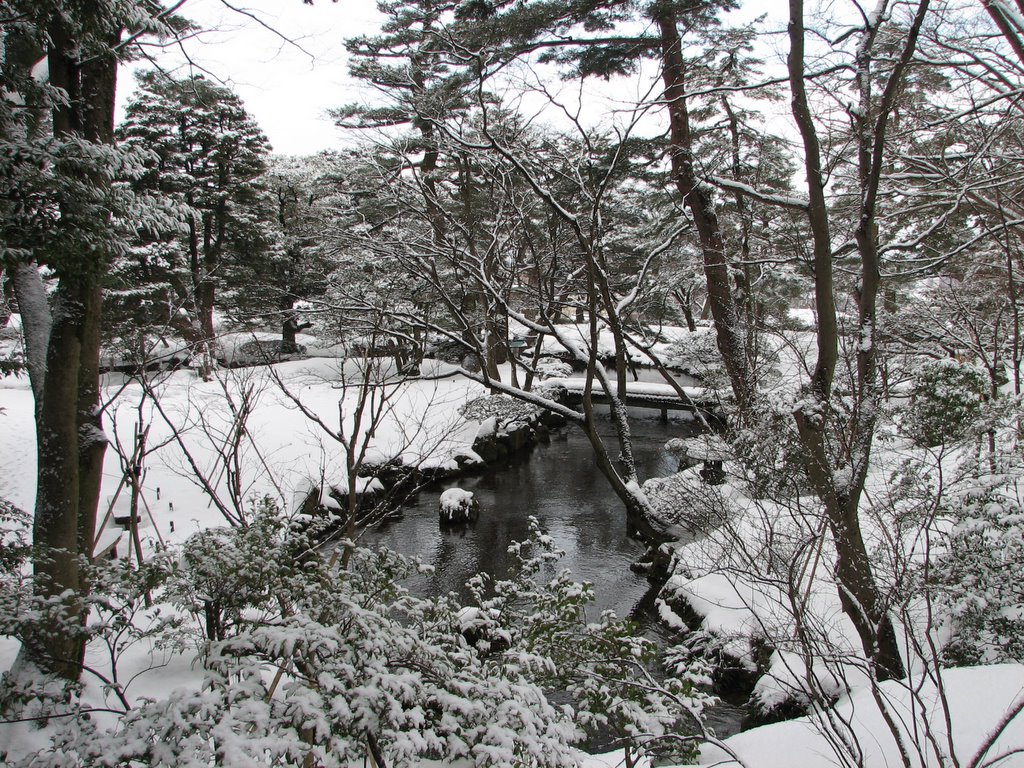
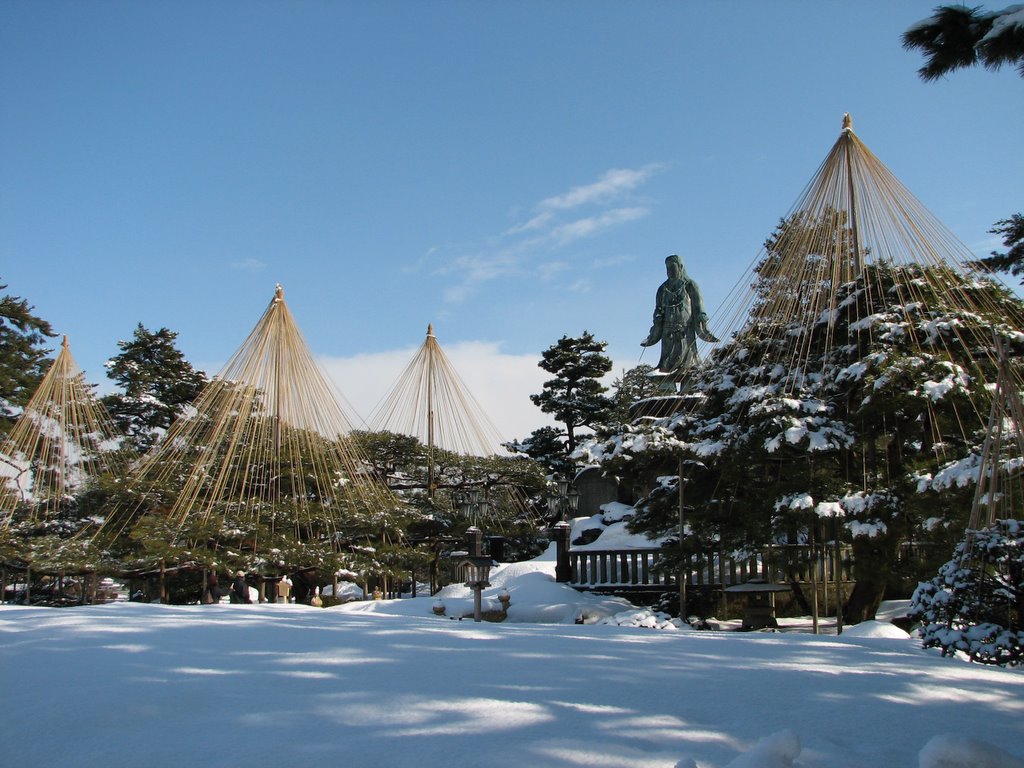
It was certainly covered in snow. In fact, since it had been snowing since I woke up, even the covering of snow was getting covered in snow. There is an upside to walking through a park during a blizzard though: most people don't want to do it. As a result, I had the park almost entirely to myself (although there were a handful of diehard snow watchers out there with me).
The leaves and the snow weren't the only thing that changed inside the park. All of the important places inside the park are now marked with (not-so-) little wooden signs written in Japanese, English, and Korean that explain what you are looking at. They said really important things like: This is a tree. This is a rock. This is a bridge.
Thirty minutes later, I got off in Kanazawa, bought a few onigiri to snack on throughout the day, and hopped onto the Kanazawa Loop Bus, headed towards Kenrokuen. Emily and I visited this park about two months ago, but I wanted to go back and see the park covered in snow.
It was certainly covered in snow. In fact, since it had been snowing since I woke up, even the covering of snow was getting covered in snow. There is an upside to walking through a park during a blizzard though: most people don't want to do it. As a result, I had the park almost entirely to myself (although there were a handful of diehard snow watchers out there with me).
The leaves and the snow weren't the only thing that changed inside the park. All of the important places inside the park are now marked with (not-so-) little wooden signs written in Japanese, English, and Korean that explain what you are looking at. They said really important things like: This is a tree. This is a rock. This is a bridge.
I spent almost four hours just walking around this park and the park across the street, Kanazawa Castle Park.
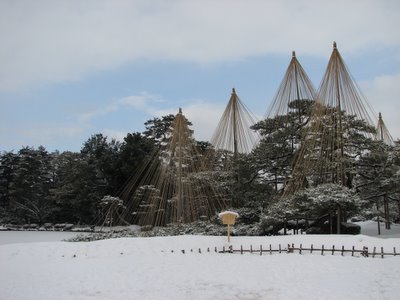
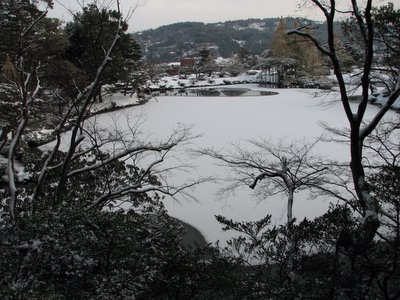
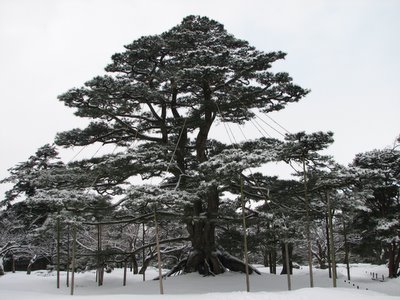
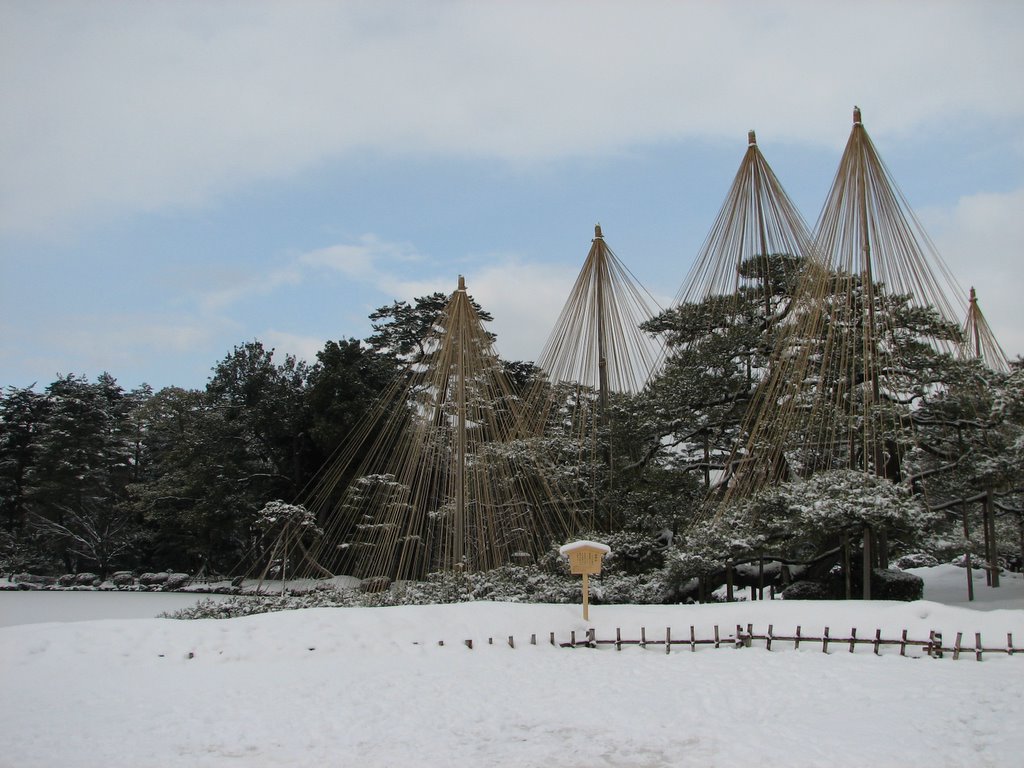
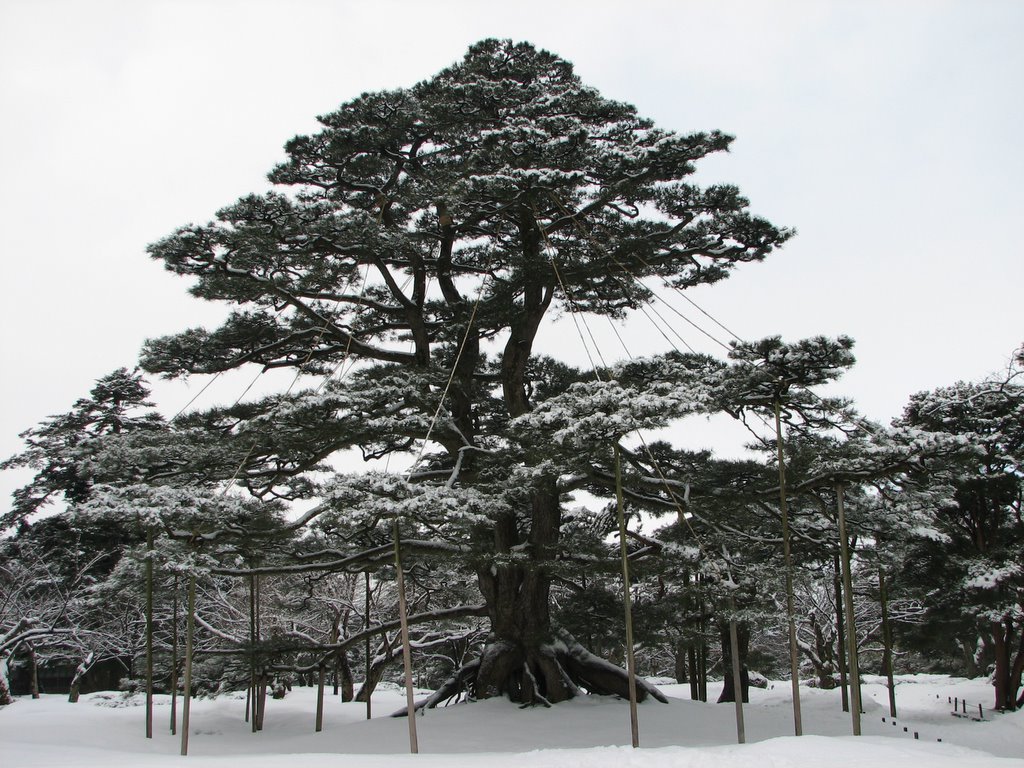
I don't want to bore you with the boring details. I'll just post a few pictures and let them do the talking for me. Don't think me a liar when you see blue in some of the pictures though. Although I was pelted for snow for most of the morning, it was sunny for about an hour, hence the blue sky.

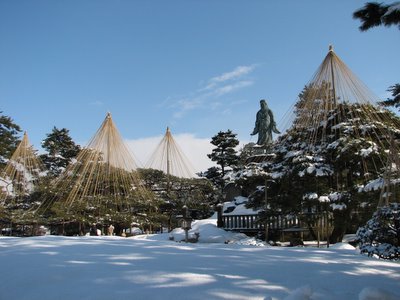
I went to Kanazawa Castle Park after meandering through Kenrokuen a couple of times. Kanazawa Castle Park, which is about twice the size of Kenrokuen, is right across the street. All you have to do to get there is to cross a bridge that goes over Ohori Dori (that's the name of a street).
I was prepared to pay an entrance fee, but was surprised to find out that this park was free, unlike Kenrokuen, which costs 300 yen. There is only a fee to go inside of the rebuilt castle. That will set you back 300 yen.
I spent most of my time milling around the park. With the exception of the huge stone walls outlining every feature of the park, Kanazawa Castle Park has more of a European garden feel to it. Kenrokuen, which is a Japanese garden in every sense of the word, is made up of dozens of narrow winding paths; Kanazawa Castle Park is more of a network of mostly grassy fields (albeit covered in 3 feet of snow) connected by long stone pathways.
The reason for the difference is more historical than aesthetic. Those really aren't grassy fields; they are the foundations for Kanazawa Castle, which, just like just about every other building built in Japan before 1945, was burned to the ground. What are now grassy fields used to be buildings filled with samurai, geisha, and ninjas (and the Anjin-san from James Clavell's SHOGUN). In fact, all of the old-looking buildings have only been recently rebuilt; the most recent one was only finished in 2001.
I was really hesitant to pay the 300 yen to go into the castle (or what I would call the castle). I wasn't really sure what was in there and I wasn't sure if any of it would be in English.
In the end I decided to just go for it. 300 yen is about what a beer costs. It wouldn't be a huge loss if everything inside the castle was in Japanese. It was just one beer.
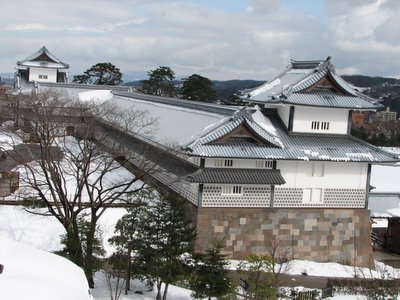 So I paid my 300 yen and went in. I'm glad I took the gamble, because the castle turned out to be really interesting.
The buildings are called Hishi Yagura, Tsuzuki Yagura, and Gojikken Nagaya. Yagura is Japanese for "turret" and I think Nagaya translates roughly into "store house." So basically, the main part of the building is a storehouse and there is a turret on each end. The store house was two stories high and each turret was three stories high; for 300 yen, you were allowed to roam free throughout the entire building on a self guided tour. All you had to do was to take your shoes off first.
The store house and the turrets had no hallways or rooms; It was all just one open space. Although you were free to go in any direction you wanted, there were arrows and ropes guiding you towards the most convenient path. You started on one end, took your shoes off, moved towards a turret, went up the stairs, walked through the second floor of the store house to get to the other turret, went downstairs when you got to the turret, and then walked back through the first floor of the store house to put your shoes back on and go back outside.
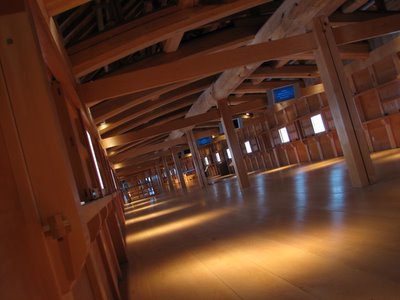 Along the way there were signs written in Japanese, English, Korean, and Chinese, along with a talking mechanical tour guide at all the points of interest inside the building. You had the option of listening to the tour in each of the four languages.
Some of the interesting things:
I was trying to find Oyama Jinjia Shrine, but I must have taken a wrong turn and ended up in front of the Daiwa with the Louis Vuitton and the Gucci that I talked about in the post about my previous trip to Kanazawa.
I had no idea Kanazawa was this small! The big parks are right down the street from the shopping district.
It was about 1:30. Having been on the go since 8:06 AM, I decided that now would be the perfect time to enjoy a tall marshmallow mocha from Starbucks. Since it had been hours since I'd eaten my last onigiri, I also treated myself to an Italian Salami sandwich. The kind people at Starbucks even heated it up for me.
I finished up my coffee and sandwich and got ready to go back out in the cold. I was supposed to meet Emily at the North exit of Takaoka Station at 4:45. That meant that I'd have to catch the 4:06 train from Kanazawa. That gave me two more hours to explore the city.
 I thought I would go explore Oyama Jinja Shrine (confident that I could find it now after spending 30 minutes pouring over my map) and then head over to the Samurai district, but I started getting tired and only made it to the shrine.
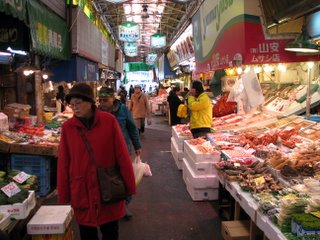
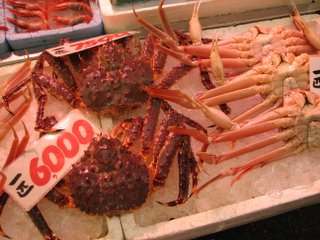
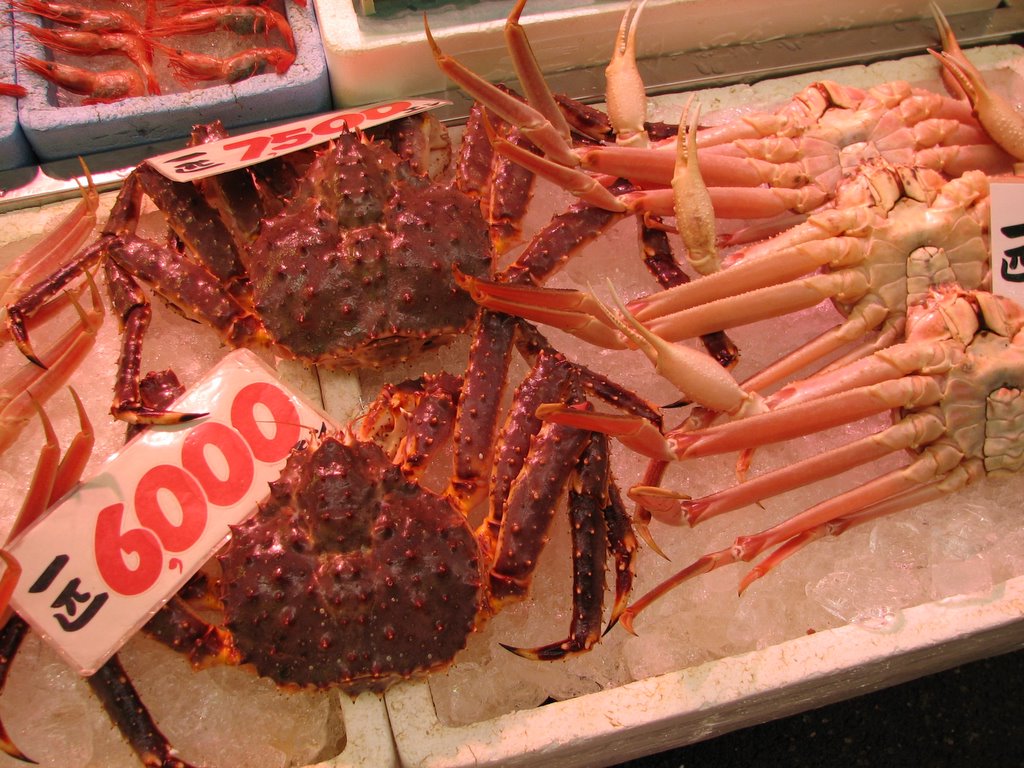
On the way to the station I walked through the same open air market where I bought the fruit on my last visit to Kanazawa. I figured out that the name of the market is Omi-Cho. I love looking at foreign produce, but I really need to learn how to say, "I don't want to buy your silly over-priced hairy crabs. I just want to look at them."
 I got to the station just in time to catch a train back to Takaoka.
I think I understand why the Japanese all sleep on the train. It's because it is so darn comfortable! At least in my part of Japan, the scenery is really pretty (when you're not going through the city), the train is really warm, and the motion of the cars gently rocks you to sleep.
I don't want to bore you with the boring details. I'll just post a few pictures and let them do the talking for me. Don't think me a liar when you see blue in some of the pictures though. Although I was pelted for snow for most of the morning, it was sunny for about an hour, hence the blue sky.

I went to Kanazawa Castle Park after meandering through Kenrokuen a couple of times. Kanazawa Castle Park, which is about twice the size of Kenrokuen, is right across the street. All you have to do to get there is to cross a bridge that goes over Ohori Dori (that's the name of a street).
I was prepared to pay an entrance fee, but was surprised to find out that this park was free, unlike Kenrokuen, which costs 300 yen. There is only a fee to go inside of the rebuilt castle. That will set you back 300 yen.
I spent most of my time milling around the park. With the exception of the huge stone walls outlining every feature of the park, Kanazawa Castle Park has more of a European garden feel to it. Kenrokuen, which is a Japanese garden in every sense of the word, is made up of dozens of narrow winding paths; Kanazawa Castle Park is more of a network of mostly grassy fields (albeit covered in 3 feet of snow) connected by long stone pathways.
The reason for the difference is more historical than aesthetic. Those really aren't grassy fields; they are the foundations for Kanazawa Castle, which, just like just about every other building built in Japan before 1945, was burned to the ground. What are now grassy fields used to be buildings filled with samurai, geisha, and ninjas (and the Anjin-san from James Clavell's SHOGUN). In fact, all of the old-looking buildings have only been recently rebuilt; the most recent one was only finished in 2001.
I was really hesitant to pay the 300 yen to go into the castle (or what I would call the castle). I wasn't really sure what was in there and I wasn't sure if any of it would be in English.
In the end I decided to just go for it. 300 yen is about what a beer costs. It wouldn't be a huge loss if everything inside the castle was in Japanese. It was just one beer.
 So I paid my 300 yen and went in. I'm glad I took the gamble, because the castle turned out to be really interesting.
The buildings are called Hishi Yagura, Tsuzuki Yagura, and Gojikken Nagaya. Yagura is Japanese for "turret" and I think Nagaya translates roughly into "store house." So basically, the main part of the building is a storehouse and there is a turret on each end. The store house was two stories high and each turret was three stories high; for 300 yen, you were allowed to roam free throughout the entire building on a self guided tour. All you had to do was to take your shoes off first.
The store house and the turrets had no hallways or rooms; It was all just one open space. Although you were free to go in any direction you wanted, there were arrows and ropes guiding you towards the most convenient path. You started on one end, took your shoes off, moved towards a turret, went up the stairs, walked through the second floor of the store house to get to the other turret, went downstairs when you got to the turret, and then walked back through the first floor of the store house to put your shoes back on and go back outside.
 Along the way there were signs written in Japanese, English, Korean, and Chinese, along with a talking mechanical tour guide at all the points of interest inside the building. You had the option of listening to the tour in each of the four languages.
Some of the interesting things:
- The entire building was handicapped accessible, complete with an elevator and a wheelchair escalator
- There were hatches underneath the bay windows that could be opened up to throw rocks (or arrows or bullets) on attackers that were climbing up the castle wall.
- The entire building was made with ancient building techniques and 72% of the wood came from Ishikawa Prefecture. I'm surprised that there are any trees left in that part of Japan.
- The building cost 4.2 billion yen (just under $40 million) to construct. They have plans to reconstruct the entire castle. I think they are waiting for the trees to grow back.
I was trying to find Oyama Jinjia Shrine, but I must have taken a wrong turn and ended up in front of the Daiwa with the Louis Vuitton and the Gucci that I talked about in the post about my previous trip to Kanazawa.
I had no idea Kanazawa was this small! The big parks are right down the street from the shopping district.
It was about 1:30. Having been on the go since 8:06 AM, I decided that now would be the perfect time to enjoy a tall marshmallow mocha from Starbucks. Since it had been hours since I'd eaten my last onigiri, I also treated myself to an Italian Salami sandwich. The kind people at Starbucks even heated it up for me.
I finished up my coffee and sandwich and got ready to go back out in the cold. I was supposed to meet Emily at the North exit of Takaoka Station at 4:45. That meant that I'd have to catch the 4:06 train from Kanazawa. That gave me two more hours to explore the city.
 I thought I would go explore Oyama Jinja Shrine (confident that I could find it now after spending 30 minutes pouring over my map) and then head over to the Samurai district, but I started getting tired and only made it to the shrine.
On the way to the station I walked through the same open air market where I bought the fruit on my last visit to Kanazawa. I figured out that the name of the market is Omi-Cho. I love looking at foreign produce, but I really need to learn how to say, "I don't want to buy your silly over-priced hairy crabs. I just want to look at them."
 I got to the station just in time to catch a train back to Takaoka.
I think I understand why the Japanese all sleep on the train. It's because it is so darn comfortable! At least in my part of Japan, the scenery is really pretty (when you're not going through the city), the train is really warm, and the motion of the cars gently rocks you to sleep.